









Cost-effectiveness
Repairing your dryer is often more economical than purchasing a new one, saving you money in the short term.
Online booking opens in a new tab.
Clothes still damp, the dryer overheating, a cycle stopping early, or an unfamiliar noise? Choose your dryer manufacturer to learn how common problems can relate to heating, airflow, moisture sensors, motors, or electronic controls. The brand pages explain available error codes and display messages, highlight model-specific differences, and outline safe first checks and situations that call for professional repair.
Don't see your dryer manufacturer below? Call us or send an online service request, and we'll confirm whether we can help with your dryer.
Repairing your dryer is often more economical than purchasing a new one, saving you money in the short term.
Extending the life of your current dryer reduces the environmental footprint associated with manufacturing and disposing of a new appliance.
You're already familiar with how your current dryer operates, making repairs a quicker solution compared to adapting to a new appliance.
Repairs allow you to address specific issues, ensuring your dryer meets your needs without compromising on features you value.
Choosing repair over replacement contributes to the reduction of electronic waste, promoting a more sustainable approach.
Repairing your dryer helps conserve the raw materials and energy required to produce a new appliance.
Diagnosing and fixing issues with your dryer provides an opportunity to learn about appliance maintenance, potentially saving you money on future repairs.
Repairing your dryer ensures continued compatibility with other appliances in your home, maintaining a cohesive household setup.
Purchasing a new dryer might involve adapting to different installation requirements, whereas repairing allows you to maintain your existing setup.
If you have a sentimental attachment to your current dryer, repairing it preserves the history and memories associated with the appliance.
Here is how to schedule dryer repair in Charlotte, NC for issues such as no heat or a drum that will not turn.
Tell us about no heat, a drum that will not turn, or any displayed error. Add your dryer model if available.
Pick an available appointment for your dryer repair visit in Charlotte.
Our technician evaluates the dryer, reviews heating, drum movement, and cycle controls as needed, and explains the estimate before approved work.
Quick, convenient online scheduling · Opens in a new tab.

E-genius Appliance Repair provides dryer repair in Charlotte, NC for common problems such as not heating, not tumbling, long drying times, or unusual noises. Our technicians diagnose the issue, explain the recommended repair, and service a wide range of makes and models.
Schedule online or call (980) 443-5851 to request dryer service.

We're only a few clicks or a phone call away.
No risk. No pressure.
Guaranteed parts and service.
Expert technicians.
Dealing with a dryer that has no heat or takes too long to dry clothes? Learn more about E-genius Appliance Repair through Google reviews left by Charlotte customers before scheduling help.
5.0 200+ Google reviews READ ALL GOOGLE REVIEWSDid our technicians help with your dryer? Share your experience on Google. Your comments are valuable to our team and to other residents comparing appliance repair options.
Leave a Google review
Thank you for your support!
DRYER REPAIR · CHARLOTTE, NC
Is your dryer not heating, not starting, taking too long to dry, or making unusual noises? Leave your number and we’ll call to discuss the problem, answer your questions, and help with dryer repair in Charlotte.
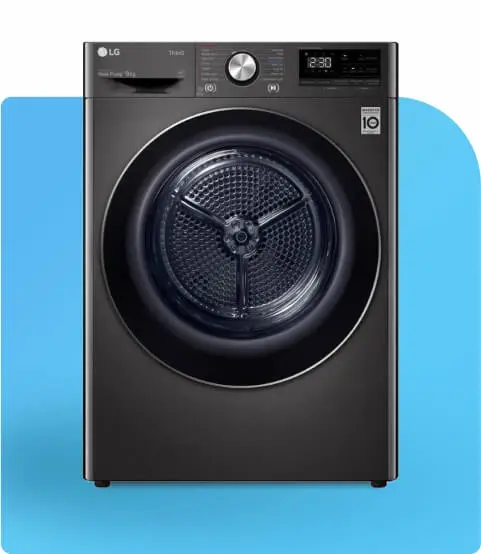 Dryer repair help
Your details are used to respond to your callback request.
Have questions? We have answers.
Check the selected cycle, load size, and clean lint filter. A vented dryer also needs an unobstructed exhaust path; a condenser or heat-pump dryer has different filter and condensate-care requirements. Report the dryer type and any airflow or water-container warning.
Yes. Drum movement alone does not confirm that the electric heating circuit has the correct supply or is working properly. Note whether the problem began after installation or an outage. Supply and internal heating checks should be performed by a qualified professional.
Sensor cycles can adjust the estimate as load conditions change. Compare the result with the chosen dryness level and load instructions. Clothes staying wet, a cycle ending unusually early, or repeated time extensions should be reported with the model and cycle name.
Yes. Condenser and heat-pump models may have additional filters, a condensate tank, or a drain connection. Follow the exact model’s maintenance instructions. Cleaning a lint screen alone may not address a condensate warning or reduced performance on a ventless machine.
Stop using the dryer if there is a burning smell, smoke, or abnormal heat. Have the appliance and the appropriate exhaust or airflow path inspected before reuse. Do not run it without its lint filter or bypass a safety device.
Provide the full model number, gas or electric heating type, vented or ventless design, selected cycle, and the exact message. Mention whether the drum turns, whether heat is present, and how long a typical load now takes to dry.
Your message has been successfully sent. We will contact you very soon!